Every vendor in cybersecurity claims to offer "zero trust." Every analyst report emphasizes its importance. And yet, most organizations we work with are still struggling to define what zero trust actually means for their environment, let alone implement it effectively.
Let's cut through the marketing and talk about what zero trust really requires.
What Zero Trust Actually Means
At its core, zero trust is simple. Never implicitly trust any user, device, or network. Every access request must be explicitly verified, regardless of where it originates.
This represents a fundamental shift from traditional perimeter-based security, where anything inside the corporate network was trusted by default. The assumption that "inside equals safe" was always flawed, but remote work and cloud computing have made it completely untenable.
Zero trust is not a product you can buy. It's an architectural approach that requires changes to people, processes, and technology across your entire organization.
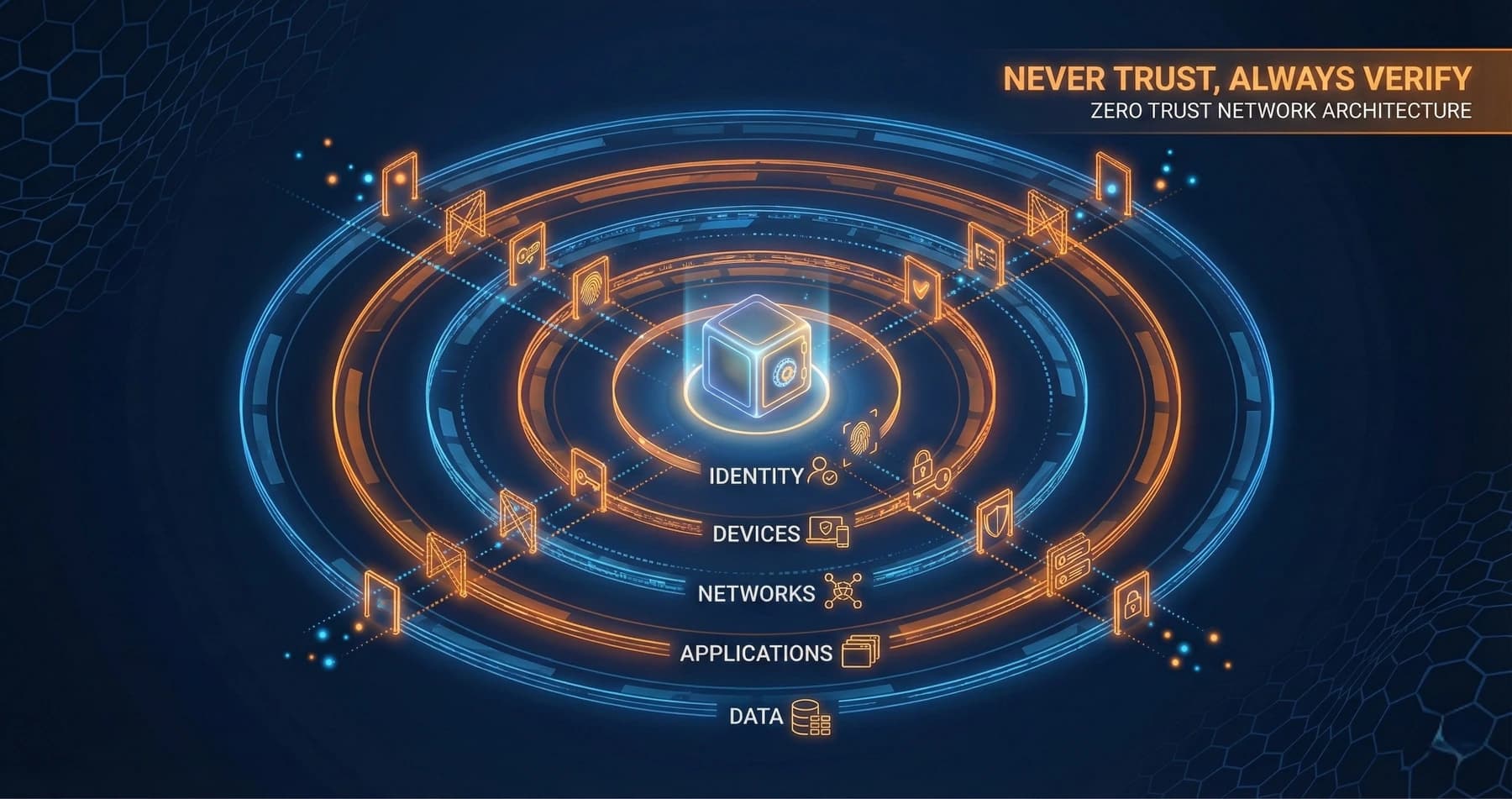
The Five Pillars of Zero Trust
Effective zero trust implementations address five interconnected domains.
1. Identity
Identity is the new perimeter. Every access decision should start with strong verification of who or what is requesting access.
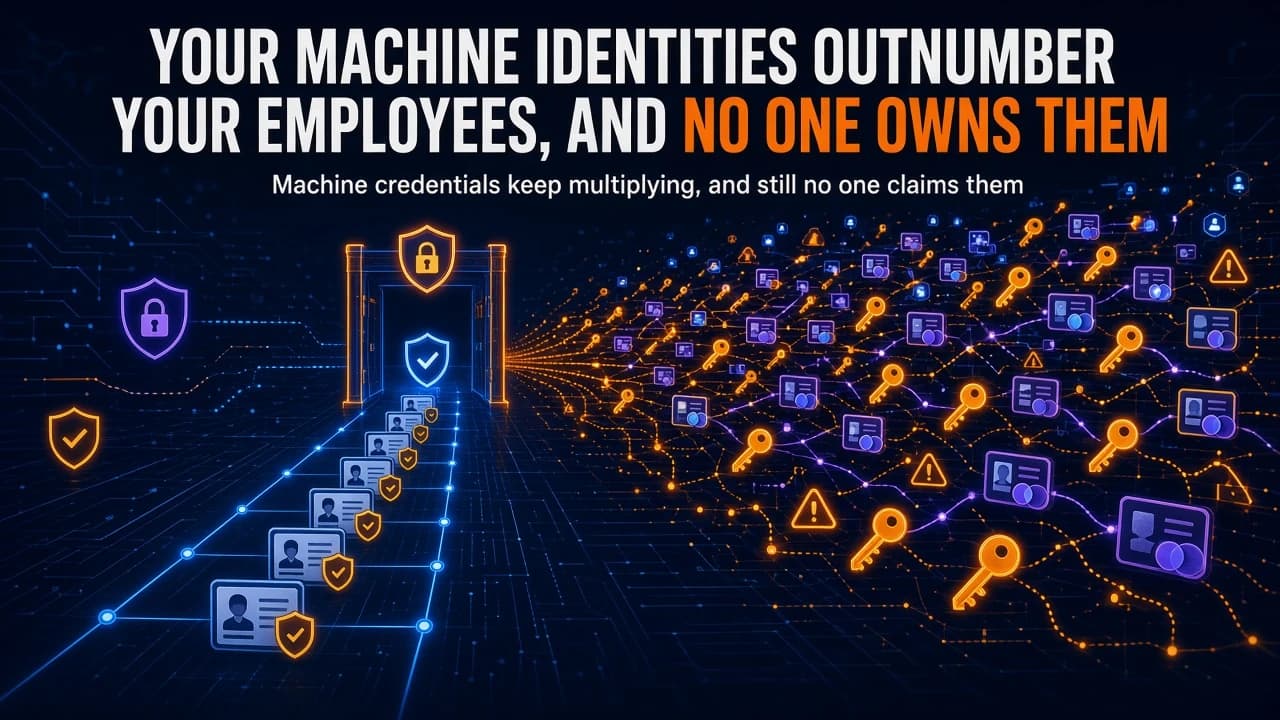
Organizations need multi-factor authentication for all users, not just privileged accounts. They need risk-based authentication that adapts to context, continuous validation that doesn't stop at login, and machine identity management for service accounts and APIs.
2. Devices
The device making a request matters as much as the user. A compromised laptop with valid credentials is still a threat.
This means device health attestation before granting access, EDR integration, certificate-based device identity, and posture assessment that includes patch status, encryption state, and security tool presence.
3. Networks
Networks should be segmented so that gaining access to one segment doesn't grant access to everything.
Microsegmentation of sensitive workloads, software-defined perimeters for application access, encrypted communications everywhere (even internally), and network access based on identity rather than location all contribute to network-level zero trust.
4. Applications
Applications need their own access controls, not just network-level restrictions.
Single sign-on with proper session management matters here. So does application-level authorization that goes beyond authentication, API security with proper rate limiting and validation, and secure application development practices.
5. Data
Data is what attackers actually want. Protecting it is the ultimate goal.
This requires data classification that actually gets implemented, encryption for data at rest and in transit, data loss prevention controls, and access logging and monitoring at the data layer.
Why Most Zero Trust Initiatives Fail
We've seen organizations invest millions in zero trust tools and still fail to meaningfully improve their security posture. The common failure modes are predictable.
Starting with technology instead of strategy
Too many organizations begin by purchasing an identity product or network segmentation tool without first understanding what they're trying to protect and from whom. The result is expensive technology that doesn't address actual risks.
Trying to boil the ocean
Zero trust is a journey, not a destination. Organizations that try to implement everything at once typically achieve nothing. Prioritization based on risk is essential.
Ignoring the user experience
Security controls that significantly impair productivity will be circumvented. Users will find ways around friction, often creating worse security outcomes than having no controls at all.
Failing to address legacy systems
Most enterprises have decades of legacy applications and infrastructure that were never designed for zero trust. Pretending these systems don't exist, or that they can be quickly replaced, is a recipe for failure.
If your zero trust roadmap doesn't explicitly address how you'll handle legacy systems that can't support modern authentication, you don't have a realistic plan.
A Practical Implementation Roadmap
Based on our experience implementing zero trust across enterprises of various sizes, here's a phased approach that actually works.
Phase 1: Foundation (Months 1-6)
The objective here is establishing identity as your primary security control plane.
Start by auditing your current state. Map all identities, access patterns, and authentication mechanisms. Deploy MFA universally, beginning with privileged accounts and expanding to all users. Implement SSO to reduce password sprawl and gain visibility into access patterns. Then enable conditional access to begin making access decisions based on context like device type, location, and risk level.
Phase 2: Device Trust (Months 4-9)
In this phase, you ensure only healthy, managed devices can access sensitive resources.
Define what constitutes a "trusted" device for your organization. Deploy device compliance checking integrated with your MDM or EMM solution. Implement certificate-based authentication for devices accessing critical systems. Enable endpoint telemetry integration so EDR data feeds into access decisions.
Phase 3: Network Segmentation (Months 6-12)
The goal here is reducing lateral movement opportunities.
Identify your crown jewel applications first. What must be protected before anything else? Implement microsegmentation starting with those most critical workloads. Deploy software-defined perimeter technology for application access without VPN. Encrypt internal traffic on the assumption that adversaries might already be inside.
Phase 4: Application Security (Months 9-15)
This phase moves authorization decisions closer to the application itself.
Begin by inventorying all applications, including shadow IT. Implement application-aware access controls that go beyond network-level restrictions. Secure your APIs with proper authentication, authorization, and rate limiting. Enable application-level logging for detection and forensics.
Phase 5: Data Protection (Months 12-18)
The final phase protects what matters most.
Classify your data, starting with the most sensitive categories. Implement DLP controls based on that classification. Enable encryption for sensitive data at rest. Deploy monitoring for data access and exfiltration attempts.
Quick Wins You Can Implement This Quarter
Not every zero trust improvement requires a major initiative. Here are changes you can make immediately.
This week. Enable MFA on your identity provider for all administrative accounts. Review and remove unnecessary standing access privileges. Enable logging on all identity systems if not already active.
This month. Implement conditional access policies that block access from unmanaged devices to sensitive applications. Deploy a password manager to reduce credential reuse. Create an inventory of all service accounts and their access.
This quarter. Complete an identity audit to identify orphaned accounts and excessive privileges. Implement just-in-time access for at least one privileged system. Deploy certificate-based authentication for your most critical server administration.
Metrics That Matter
How do you know if your zero trust initiative is working? These metrics provide meaningful insight.
| Metric | Target | Why It Matters |
|---|---|---|
| MFA coverage | Over 95% of authentications | Measures baseline identity security |
| Average access request approval time | Under 4 hours for standard requests | Balances security with productivity |
| Percentage of access with just-in-time provisioning | Over 50% for privileged access | Indicates reduction of standing privileges |
| Failed authentication attempts | Trending down | Shows reduced attack surface |
| Mean time to revoke compromised credentials | Under 1 hour | Measures incident response capability |
The Bottom Line
Zero trust is not a checkbox you can mark complete. It's an ongoing commitment to validating every access request based on multiple factors. The organizations that succeed treat it as a multi-year program with clear priorities, realistic timelines, and continuous measurement.
Start with identity. Be ruthless about prioritization. Address legacy systems honestly. And remember that the goal isn't to implement every zero trust capability. It's to meaningfully reduce risk to your specific organization.
Related Service
Learn more about how we can help with Identity & Access Management.
Explore Identity & Access Management Services →